
Analysis / 3D web and commerce
Snapchat brings web games inside its app
Brands commissioning mobile mini-games often have to choose between a standalone website and a downloadable app. Snapchat Web Lenses introduces another distribution option, but its strict packaging and runtime requirements need to shape the game from the outset.
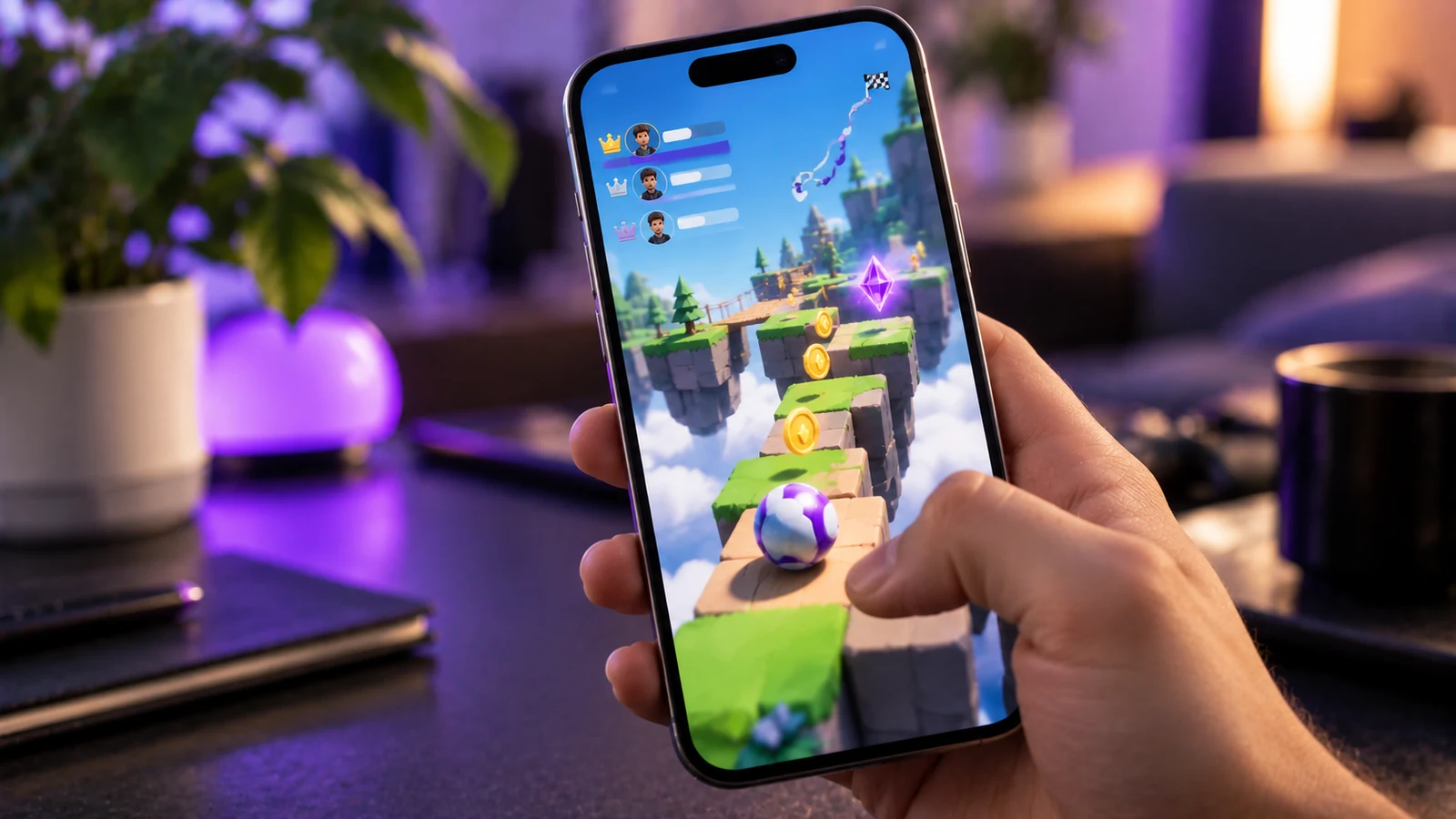
Brands can now publish lightweight 3D web games inside Snapchat without building a separate mobile application or distributing it through an app store. The new Web Lenses format supports games built with standard web technologies, provided they run in portrait orientation, fit within an 8 MB compressed package and do not require external network access.
On 23 October 2026, PlayCanvas announced support for publishing its games as Snapchat Web Lenses.
The feature is currently in beta on Snapchat for iOS and Android.
Snap's developer documentation recommends PlayCanvas for Web Lenses, although the format is not restricted to a single web framework.
Web Lenses run as games inside Snapchat
A Web Lens is a packaged web application that opens inside Snapchat using the existing Lens experience.
Developers build the game, package its files into a ZIP archive and submit it through My Lenses.
Once approved, it can be discovered and launched inside Snapchat without a standalone app installation.
The underlying technology resembles a mobile web game, but the execution environment is substantially more restricted than a normal browser.
Every essential game resource must be included in the submitted package.
The Lens cannot freely contact external servers to download assets or request live application data.
That makes the format most suitable for compact gameplay loops, such as puzzles, arcade challenges and simple 3D experiences.
Snap reported 971 million monthly users in its second-quarter 2026 results and more than 175 million monthly Game Lenses users, according to the figures cited by PlayCanvas.
These figures indicate the scale of Snapchat's reported audience. They do not establish the reach of any individual branded game.
The 8 MB limit shapes production decisions
Web Lenses have specific packaging and runtime requirements.
| Criterion | What to check |
|---|---|
| Package size | The complete ZIP archive must not exceed 8 MB. |
| Entry file | index.html must sit at the ZIP root and be no larger than 1 MB. |
| Screen orientation | Full-screen portrait layout with a 9:16 aspect ratio. |
| Landscape support | Landscape mode is not currently supported. |
| Network access | No general network access; required assets must be packaged locally. |
| Camera and microphone | Neither is available to the web game. |
| Motion sensors | Device motion sensors cannot be accessed. |
| Runtime capabilities | WebAssembly, including multithreading, Web Workers and eval() are supported. |
| Supported devices | Snapchat on iOS and Android. |
| Availability | Beta, with requirements subject to change. |
Source: PlayCanvas, 23 October 2026.
For a 3D game, the size allowance must accommodate code, geometry, textures, audio and any additional resources.
That changes asset planning.
Small models, reusable materials and compressed textures become particularly important.
Unnecessary resources should be removed from the production build rather than simply excluded from the visible scene.
A small, well-defined environment will generally be easier to accommodate than a game built around numerous locations or downloadable content.
Our guide to the limitations of mobile 3D viewers explains why download size and device performance need separate consideration.
What kinds of branded games are practical?
The format lends itself to self-contained interactive experiences with straightforward controls.
A brand might commission an obstacle-avoidance game using visual elements from its campaign.
Another possibility is a small 3D puzzle in which players arrange objects or complete a sequence.
Both could operate without a connection to an external backend.
By contrast, a game that depends on a company's server for continuous updates would not fit the current Web Lens sandbox.
Nor would a concept requiring live product data, downloadable levels or camera-based interaction.
The core experience needs to work with the resources available locally.
For 3D production, geometric complexity should also be considered alongside textures and code size. Our article on why there is no universal polygon budget explains how performance requirements depend on the intended device and use.
Snapchat provides leaderboards, Bitmoji and storage
Despite the restricted networking environment, Web Lenses can use several features through Snapchat's own API.
Leaderboards allow games to submit integer scores and display player rankings. They support competitive mechanics, but should not be treated as a complete campaign reporting solution.
Bitmoji provides access to a player's avatar as either a rigged 3D GLB model or a 2D image.
The avatar can become a playable character or appear in the interface.
Storage allows small amounts of player-specific data to persist between sessions.
According to Snap's storage documentation, the limit is 32 KiB per value and 100 KiB per Lens per player.
This may be enough for compact save data, such as progress or preferences.
It does not replace a general-purpose database or provide unrestricted external connectivity.
How does publishing work?
Developers submit Web Lenses through My Lenses.
The required materials include:
1. A ZIP archive containing the complete game and root-level index.html.
2. A 512 × 512-pixel PNG icon.
3. A 5-second preview video at 720 × 1280 resolution.
4. The necessary Lens details for submission and review.
Snapchat reviews the Lens before making it available.
Every subsequent upload also goes through review, according to Snap's publishing guidance.
This makes testing particularly important before submission.
The finished build should be checked on a physical mobile device in portrait orientation.
Interface elements must remain clear of Snapchat's own controls, and the game should be tested on devices with different graphics capabilities.
Teams building web-based 3D content should also consider compatibility planning, as covered in our article on WebGPU support and browser fallback strategies.
Can creators earn money from Web Lenses?
Snapchat offers a monetisation route through Lens+ Payouts.
Eligible creators can make a Lens exclusive to Lens+ and Platinum subscribers and receive a share of revenue linked to engagement.
According to PlayCanvas, participation is limited to creators aged 18 or older in eligible countries.
The available sources do not establish whether the programme is available in Spain or what specific eligibility conditions apply there.
This arrangement should also be distinguished from a branded marketing campaign.
The cited documentation does not establish campaign reporting capabilities or commercial results for a particular brand.
Businesses should define the measurements they require and verify their availability before committing to a launch.
What should you decide this week?
If you are considering a branded mini-game, first establish whether its core mechanics can work in portrait orientation, without network access and inside an 8 MB archive. Build a representative prototype using optimised models and textures before committing to the full content production. If you want to develop a 3D game for the web or Snapchat, tell us which gameplay experience you have in mind so we can assess its technical requirements.
Sources
Checked on October 25, 2026